-
Graduation
-
Graduation Announcements
-
Graduation Signs
-
Graduation Photo Boards
-
Graduation Yard Signs
-
Advice & Memory Cards
-
Graduation Thank You Cards
-
Graduation Napkins
-
Graduation Coasters
- Weddings
- Save the Dates
- Wedding Invitations
- Enclosure Cards
- Programs
- Accessories
- Reception
- Favors
- Wedding Signs
- Thank you Cards
- Showers & Parties
- Occasions & Holidays
- Business
- Calendars
- Sports Schedules
- Household Tips
- Postcards
- Essentials
- Business Christmas Cards
- Gifts & Favors
- Yard Signs
- Custom Magnets
- Business Extras
- Photo Tiles
- Colleges & K12
Free Recipient Addressing Available
Wedding Invitation Wording
With your design selected, wedding invitation wording is the next step—balancing style, tradition, and the details that matter most to you.
-
Before you begin, consider…
- Who is hosting?
- Traditional or modern wording?
- How to handle complex family dynamics
- Desired dress code
- How much information do you need to share?
Wedding Invitation Wording Examples for Specific Situations

1. Hosts' Names
The host line appears at the top of the invitation and traditionally names the people hosting the wedding—often the bride’s parents. Today, it can reflect anyone contributing to or supporting the celebration.
Modern wording is flexible. You may choose to include both sets of parents, honor a deceased parent, or keep it simple with a line like, “Together with their families.” If you and your partner are hosting, this line can be omitted entirely.

2. Request to Attend
This line formally invites guests and helps set the tone for your celebration. It typically begins with a lowercase letter and flows directly from the host line.
-
Wording can range from traditional to relaxed, depending on your style. Common examples include:
- request the pleasure of your company
- request the honor of your presence
- invite you to celebrate with them
- would love for you to join them

3. Couple's Names
Your names are the focal point of the invitation. Traditionally, the bride’s first and middle names appear first, followed by the groom’s full name on a separate line.
Modern formats offer more flexibility—you may choose to include full names, first names only, or present both names on a single line. The format often reflects the overall tone of the invitation.

4. Ceremony Details
These lines share the essential details of your ceremony. Formal wording spells out the date and time, while modern invitations often use numerals for a more streamlined look.
-
Examples:
- Formal: Saturday, the ninth of May, two thousand twenty-seven at five o’clock
- Modern: Saturday, May 9, 2027, at 5 p.m.
For destination weddings, clearly listing the location helps guests plan ahead. Additional travel details can be included on a seperate enclosure card or wedding website.

5. Reception Details
If a reception follows the ceremony, you can include a simple line such as “Reception to follow.” If the reception is at a different location, it’s helpful to note that here and provide full details on a separate insert.

6. Enclosure cards
To share additional details with guests, add one or more enclosure cards to your invitation. RSVP, Details, Attire, and/or Registry cards are a simple way to help guests feel prepared to join the celebration without overcrowding your invitation.
Quick guide to Enclosure Cards
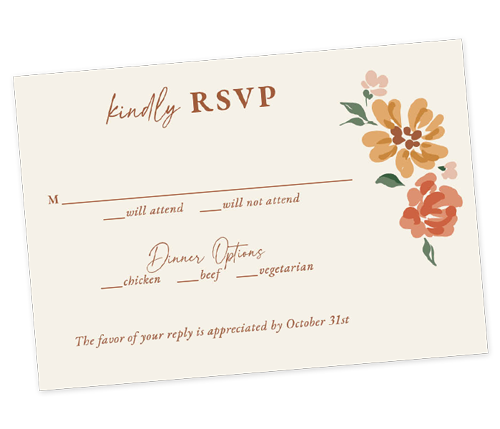
RSVP Cards
Traditionally, RSVP cards were postcards with a pre-placed stamp for guests to mail back their response. Couples who are collecting RSVPs on their wedding website may choose to include a QR code for guests to scan and respond. (We have a free QR code builder that allows you to place a code directly on your RSVP card with a link that never expires).

Details Cards
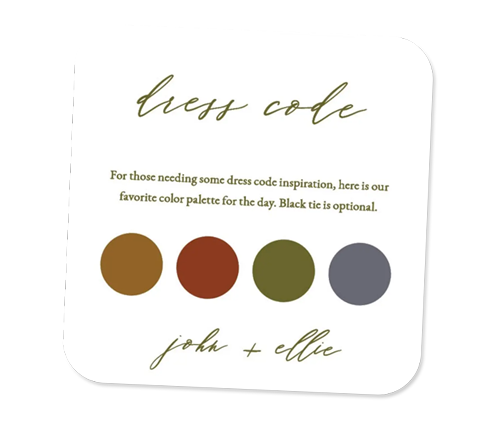
Take out the guesswork for your guests. Include details about accommodations, tips for parking or directions, dress code, or reception location details so they feel confident joining for your ceremony. If there are any pre-wedding events for a select group of guests (i.e. family, out-of-town guests), including a separate Details Card is an ideal way to send information to only those guests.
Wedding Invitation Wording Examples
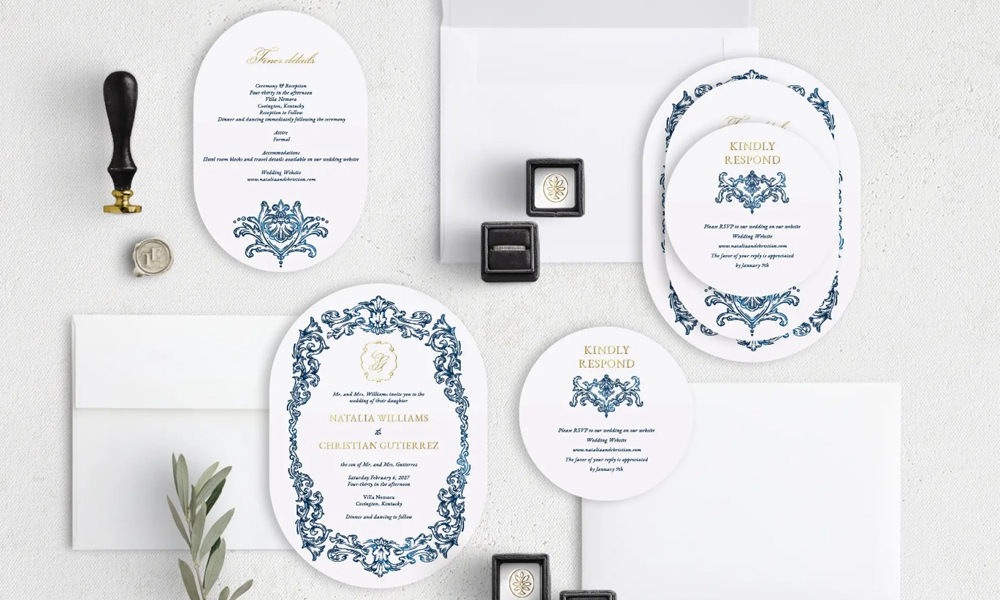
Wedding invitation wording can be tricky to navigate, especially if you're not sure where to start. Here are several examples of different styles and formats that you can mix and match to create your perfect wedding invitation.
Casual Invitation Wording
Casual wedding invitation wording often reflects a more relaxed and intimate tone. As such, titles such as "Mr." and "Mrs." are often omitted, and names are written simply and without pretense. The "request to attend" line may also be more straightforward and heartfelt, using simple language to convey the couple's desire to share their special day with their loved ones.
Overall, casual wedding invitations prioritize creating a warm and welcoming atmosphere, and often feature more personal touches and details that reflect the couple's unique style and personality.
Anna Evelyn Johnson
and John Michael Smith
would love for you to join them
at their wedding celebration
on Saturday, the eighteenth of July
two thousand twenty-seven
at four o'clock
Grace Fellowship Church
Rochester, New YorkAlong with their families
Anna Johnson
and John Smith
invite you to celebrate with them
on Saturday, the eighteenth of July
two thousand twenty-seven
at four o'clock
Grace Fellowship Church
Rochester, New York
Formal Invitation Wording
Formal weddings often aim to create a sense of elegance and luxury. As such, the wording of the wedding invitation typically reflects this formality, with the inclusion of full names, middle names, and titles. The host line is also an important element of the invitation, as it indicates who is paying for the wedding and hosting the event.
The request line is also an important part of a formal wedding invitation and can include wording such as "request the honor of your presence" or "cordially invite you to attend."
Formal weddings may also have specific dress codes, and it is important to incl.ude this information on the invitation so that guests can prepare accordingly. This might include wording such as "black tie" or "cocktail attire," depending on the level of formality of the wedding.
Miss Anna Evelyn Johnson
and
Mr. John Michael Smith
request the honor of your presence
as they unite in marriage
on Saturday, the eighteenth of July
two thousand twenty-seven
at four o'clock
Grace Fellowship Church
554 First Street
Rochester, New York
Mr. and Mrs. Robert Allen Johnson
request the honor of your presence
at the marriage of their daughter
Anna Evelyn
to
John Michael Smith
son of
Mr. and Mrs. John Jacob Smith
on Saturday, the ninth of May
two thousand twenty-seven
at five o'clock
Grace Fellowship Church
554 First Street
Rochester, New York
Traditional Invitation Wording
Traditional wedding invitation wording typically reflects a formal tone and includes formal titles for the couple and their families. The use of titles such as "Mr." and "Mrs." is common, as is the inclusion of the bride's middle name. If there are any military or professional titles in the family they should be included as well.
Mr. and Mrs. Robert Allen Johnson
request the honor of your presence
at the marriage of their daughter
Anna Evelyn
to
John Michael Smith
on Saturday, the ninth of May
two thousand twenty-seven
at five o'clock
Grace Fellowship Church
554 First Street
Rochester, New York
Black tie
Mr. and Mrs. Robert Allen Johnson
and
Mr. and Mrs. John Jacob Smith
request the pleasure of your company
at the marriage of their children
Anna Evelyn
and
John Michael
on Saturday, the ninth of May
two thousand twenty-seven
at five o'clock
Grace Fellowship Church
Rochester, New York
Modern Invitation Wording
Modern invitation wording often allows for more creativity and flexibility, with the design of the invitation itself often dictating the wording. This can include playful or lighthearted wording, such as using phrases like "tying the knot" or "joining in love and marriage." The first names of the bride and groom may also take center stage, with less emphasis on middle names or last names.
Anna
and John
invite you to celebrate with them
as they tie the knot
on Saturday, the eighteenth of July
two thousand twenty-seven
at four o'clock
Grace Fellowship Church
Rochester, New York
Julie Smith
and
John Smith
would love for you to join them
at the marriage of
Anna Johnson
to their son
John Smith
on Saturday, May 9, 2027, at 5 p.m.
Grace Fellowship Church
Rochester, New York
Destination Invitation Wording
The location of a destination wedding is important and should be clearly stated on the wedding invitation. It is also a good idea to include additional details on the invitation or on separate enclosure cards to help guests plan their travel and accommodations.
Amy and Robert Johnson
invite you to pack your bags and join them
at the marriage of their daughter
Anna Evelyn
to
John Michael Smith
on Saturday, May 9, 2027, at 5 p.m.
Four Seasons Resort Hualalai
Kailua-Kona, Hawaii
travel details enclosedJulie Smith
and
John Smith
invite you to pack your bags and join them
at the marriage of
Anna Evelyn
to their son
John Michael Smith
on Saturday, May 9, 2027, at 5 p.m.
Four Seasons Resort Hualalai
Kailua-Kona, Hawaii
travel details enclosed
Bride and Groom Hosting
It's becoming more common for couples to host their own weddings, especially as people are getting married later in life. In these cases, the wording of the invitation may differ from the traditional format, as the couple themselves are the ones inviting the guests.
There are many creative and fun designs available for wedding invitations that feature the names of the couple in a creative way. However, it is still important to make sure that all the pertinent details of the wedding are included in the invitation, such as the date, time, and location.
Casual
Anna Evelyn Johnson
and John Michael Smith
would love for you to join them
at their wedding celebration
on Saturday, the eighteenth of July
two thousand twenty-seven
at four o'clock
Grace Fellowship Church
Rochester, New York
Formal
Anna Evelyn Johnson
and
John Michael Smith
request the honor of your presence
as they unite in marriage
on Saturday, the eighteenth of July
two thousand twenty-seven
at four o'clock
Grace Fellowship Church
554 First Street
Rochester, New York
Traditional
Anna Evelyn Johnson
and
John Michael Smith
request the honor of your presence
at the celebration of their marriage
on Saturday, the eighteenth of July
two thousand twenty-seven
at four o'clock
Grace Fellowship Church
Rochester, New York
Modern
Anna Evelyn Johnson
and John Michael Smith
invite you to celebrate with them as they tie the knot
on Saturday, the eighteenth of July
two thousand twenty-seven
at four o'clock
Grace Fellowship Church
Rochester, New York
Bride's Parents Hosting
Traditionally the parents of the bride are responsible for paying for the wedding and, as such, they are the ones who extend the invitation to the guests. In this case, it is customary to list the bride's parents' names first on the wedding invitation. The bride is typically listed with her first and middle name, followed by the groom's full name.
Casual
Mr. and Mrs. Robert Johnson
would love for you to join them
at the marriage of their daughter
Anna Evelyn
to John Michael Smith
Saturday, July 18, 2027
at 5:00 in the evening
Grace Fellowship Church
Rochester, New York
Formal
Mr. and Mrs. Robert Allen Johnson
request the honor of your presence
at the marriage of their daughter
Anna Evelyn
to
John Michael Smith
on Saturday, the ninth of May
two thousand twenty-seven
at five o'clock
Grace Fellowship Church
554 First Street
Rochester, New York
Black tie
Traditional
Mr. and Mrs. Robert Allen Johnson
request the pleasure of your company
at the marriage of their daughter
Anna Evelyn
to
John Michael Smith
on Saturday, the ninth of May
two thousand twenty-seven
at five o'clock
Grace Fellowship Church
Rochester, New York
Modern
Amy and Robert Johnson
invite you to celebrate with them
at the marriage of their daughter
Anna Evelyn
to
John Michael Smith
on Saturday, May 9, 2027, at 5 p.m.
Grace Fellowship Church
Rochester, New York
Including Groom's Parents
Even if the bride's parents are hosting or paying for the wedding, it is still appropriate to include the groom's parents' names on the wedding invitation. This is a way to show respect and appreciation for their contribution and to acknowledge their role in the wedding.
Casual
Mr. and Mrs. Robert Johnson
would love for you to join them
at the marriage of their daughter
Anna Evelyn
to John Michael Smith
son of
Julie and John Smith
Saturday, July 18, 2027
at 5:00 in the evening
Grace Fellowship Church
Rochester, New York
Formal
Mr. and Mrs. Robert Allen Johnson
request the honor of your presence
at the marriage of their daughter
Anna Evelyn
to
John Michael Smith
son of
Mr. and Mrs. John Jacob Smith
on Saturday, the ninth of May
two thousand twenty-seven
at five o'clock
Grace Fellowship Church
554 First Street
Rochester, New York
Traditional
Mr. and Mrs. Robert Allen Johnson
request the pleasure of your company
at the marriage of their daughter
Anna Evelyn
to
John Michael Smith
son of
Mr. and Mrs. John Jacob Smith
on Saturday, the ninth of May
two thousand twenty-seven
at five o'clock
Grace Fellowship Church
Rochester, New York
Modern
Amy and Robert Johnson
invite you to celebrate with them
at the marriage of their daughter
Anna Evelyn
to
John Michael Smith
son of
Julie and John Smith
on Saturday, May 9, 2027, at 5 p.m.
Grace Fellowship Church
Rochester, New York
Groom's Parents Hosting
If the groom's parents are hosting or paying for the wedding, it is appropriate to list their names first on the wedding invitation. However, it is still customary to list the bride's name first in the invitation text, along with her maiden name.
Casual
Mr. and Mrs. John Jacob Smith
would love for you to join them
at the marriage of
Anna Evelyn Johnson
to their son
John Michael
Saturday, July 18, 2027
at 5:00 in the evening
St. Paul's Church
46 Main Street
Butler, Kentucky
Formal
Mr. and Mrs. John Jacob Smith
request the honor of your presence
at the marriage of
Miss Anna Evelyn Johnson
to their son
Mr. John Michael
on Saturday, the eighteenth of July
two thousand twenty-seven
at four o'clock in the afternoon
St. Paul's Church
46 Main Street
Butler, Kentucky
Traditional
Mr. and Mrs. John Jacob Smith
request the pleasure of your company
at the marriage of
Miss Anna Evelyn Johnson
to their son
Mr. John Michael
on Saturday, the eighteenth of July
two thousand twenty-seven
at five o'clock
St. Paul's Church
46 Main Street
Butler, Kentucky
Modern
Julie and John Smith
invite you to celebrate with them
at the marriage of
Anna Johnson
to their son
John Michael
on Saturday, July 18, 2027, at 5 p.m.
St. Paul's Church
46 Main Street
Butler, Kentucky
Both sets of Parents Hosting
It is becoming more common for both sets of parents to contribute financially to a wedding, and in these cases, it is appropriate to list both sets of parents' names on the wedding invitation. Typically, the bride's parents' names are listed first, followed by the groom's parents' names, before the request line.
Casual
Mr. and Mrs. Robert Allen Johnson
along with Mr. and Mrs. John Jacob Smith
would love for you to join them
at the marriage of their children
Anna Evelyn
and
John Michael
Saturday, July 18, 2027
at 5:00 in the evening
Grace Fellowship Church
Rochester, New York
Formal
Mr. and Mrs. Robert Allen Johnson
and
Mr. and Mrs. John Jacob Smith
request the honor of your presence
at the marriage of their children
Anna Evelyn
and
John Michael
on Saturday, the ninth of May
two thousand twenty-seven
at five o'clock
Grace Fellowship Church
554 First Street
Rochester, New York
Traditional
Mr. and Mrs. Robert Allen Johnson
and
Mr. and Mrs. John Jacob Smith
request the pleasure of your company
at the marriage of their children
Anna Evelyn
and
John Michael
on Saturday, the ninth of May
two thousand twenty-seven
at five o'clock
Grace Fellowship Church
Rochester, New York
Modern
Amy and Robert Johnson
and
Julie and John Smith
invite you to celebrate with them
at the marriage of their children
Anna Evelyn
and
John Michael
on Saturday, May 9, 2027, at 5 p.m.
Grace Fellowship Church
Rochester, New York
Divorced Parents Hosting
When listing the names of divorced parents on a wedding invitation, it's customary to list them on separate lines, with the mother's name listed first. If either parent has remarried, their spouse's name should be included as well.
If there is a discrepancy in the last name, it's important to include the bride's full name to avoid any confusion.
Divorced Parents of the Bride
(Casual)
Ms. Amy Johnson
and
Mr. Robert Johnson
would love for you to join them
at the marriage of their daughter
Anna Evelyn
to
John Michael Smith
Saturday, July 18, 2027
at 5:00 in the evening
Grace Fellowship Church
Rochester, New York
Divorced Parents of the Bride
(Formal)
Ms. Amy Joann Johnson
and
Mr. Robert Allen Johnson
request the honor of your presence
at the marriage of their daughter
Anna Evelyn
to
John Michael Smith
on Saturday, the ninth of May
two thousand twenty-seven
at five o'clock
Grace Fellowship Church
554 First Street
Rochester, New York
Divorced Parents of the Groom
(Traditional)
Ms. Julie Jane Smith
and
Mr. John Jacob Smith
request the pleasure of your company
at the marriage of
Anna Evelyn Johnson
to their son
John Michael Smith
on Saturday, the ninth of May
two thousand twenty-seven
at five o'clock
Grace Fellowship Church
Rochester, New York
Divorced Parents of the Groom
(Modern)
Julie Smith
and
John Smith
invite you to celebrate with them
at the marriage of
Anna Evelyn
to their son
John Michael Smith
on Saturday, May 9, 2027, at 5 p.m.
Grace Fellowship Church
Rochester, New York
Divorced Parent & Stepparent
of Bride Hosting
(Traditional)
Mr. and Mrs. Robert Allen Johnson
request the pleasure of your company
at the marriage
of Mrs. Johnson's daughter
Anna Jones
to
John Michael Smith
on Saturday, the ninth of May
two thousand twenty-seven
at five o'clock
Grace Fellowship Church
Rochester, New York
Divorced Parent & Stepparent
of Bride Hosting
(Formal)
Mr. and Mrs. Robert Allen Johnson
request the honor of your presence
at the marriage
of Mrs. Johnson's daughter
Anna Jones
to
John Michael Smith
on Saturday, the ninth of May
two thousand twenty-seven
at five o'clock
Grace Fellowship Church
554 First Street
Rochester, New York
Divorced Parent & Stepparent
of Bride Hosting
(Casual)
Mr. and Mrs. Robert Johnson
would love for you to join them
at the marriage of Mrs. Johnson's daughter
Anna Jones
to
John Michael Smith
Saturday, July 18, 2027
at 5:00 in the evening
Grace Fellowship Church
Rochester, New York
Complicated Family Situations
When it comes to family situations that are complicated, it can be challenging to decide who will host an event, such as a wedding. In some cases, allowing everyone to host may be the easiest solution to avoid any potential conflicts or hurt feelings.
However, there may be instances when certain family relationships are especially important and should be acknowledged in the hosting or planning of an event. Ultimately, the decision on who will host an event should be based on what is most comfortable and appropriate for the couple and their families. It's important to communicate openly and honestly with everyone involved and to find a solution that works for everyone.
ALL ARE HOSTING
(Casual)
Along with their families
Anna Evelyn Johnson
and John Michael Smith
would love for you to join them
at their wedding celebration
on Saturday, the eighteenth of July
two thousand twenty-seven
at four o'clock
Grace Fellowship Church
Rochester, New York
ALL ARE HOSTING
(Formal)
Together with their parents
Anna Evelyn Johnson
and
John Michael Smith
request the honor of your presence
as they unite in marriage
on Saturday, the eighteenth of July
two thousand twenty-seven
at four o'clock
Grace Fellowship Church
554 First Street
Rochester, New York
ALL ARE HOSTING
(Traditional)
Together with their families
Anna Evelyn Johnson
and
John Michael Smith
request the honor of your presence
at the celebration of their marriage
on Saturday, the eighteenth of July
two thousand twenty-seven
at four o'clock
Grace Fellowship Church
Rochester, New York
ALL ARE HOSTING
(Modern)
Along with their families
Anna Evelyn Johnson
and John Michael Smith
invite you to celebrate with them as they tie the knot
on Saturday, the eighteenth of July
two thousand twenty-seven
at four o'clock
Grace Fellowship Church
Rochester, New York
Bride's Mother & Groom's Remarried Parents
(Casual)
Mrs. Amy Marie Johnson
along with Mrs. Julie Baker and Mr. John Smith
would love for you to join them
at the marriage of their children
Anna Evelyn
and
John Michael
Saturday, July 18, 2027
at 5:00 in the evening
Grace Fellowship Church
Rochester, New York
Bride's Mother & Groom's Remarried Parents
(Formal)
Mrs. Amy Marie Johnson
and
Mrs. Julie Baker and Mr. John Smith
request the honor of your presence
at the marriage of their children
Anna Evelyn
and
John Michael
on Saturday, the ninth of May
two thousand twenty-seven
at five o'clock
Grace Fellowship Church
554 First Street
Rochester, New York
Bride's Mother & Groom's Remarried Parents
(Traditional)
Mrs. Amy Marie Johnson
and
Mrs. Julie Baker and Mr. John Smith
request the pleasure of your company
at the marriage of their children
Anna Evelyn
and
John Michael
on Saturday, the ninth of May
two thousand twenty-seven
at five o'clock
Grace Fellowship Church
Rochester, New York
Both Bride's Remarried Parents
(Casual)
Mr. and Mrs. Robert Johnson
and
Mr. and Mrs. Neil Blakely
would love for you to join them
at the marriage of their daughter
Anna Evelyn
to John Michael Smith
Saturday, July 18, 2027
at 5:00 in the evening
Grace Fellowship Church
Rochester, New York
Both Bride's Remarried Parents
(Formal)
Mr. and Mrs. Robert Allen Johnson
and
Mr. and Mrs. Neil Andrew Blakely
request the honor of your presence
at the marriage of their daughter
Anna Evelyn
to
John Michael Smith
on Saturday, the ninth of May
two thousand twenty-seven
at five o'clock
Grace Fellowship Church
554 First Street
Rochester, New York
Both Bride's Remarried Parents
(Traditional)
Mr. and Mrs. Robert Allen Johnson
and
Mr. and Mrs. Neil Andrew Blakely
request the pleasure of your company
at the marriage of their daughter
Anna Evelyn
to
John Michael Smith
on Saturday, the ninth of May
two thousand twenty-seven
at five o'clock
Grace Fellowship Church
Rochester, New York
Including Deceased Parent
Including a loved one in an invitation can be a beautiful way to honor their memory and keep them present during the special occasion. Consider using a quote or poem that reminds you of your loved one. You can include this on the invitation or on a separate card that you include with the invitation. If your loved one had a favorite flower, color, or symbol, you could include that in the design of your invitation.
Remember, the focus should be on the union of the couple, so make sure that any tribute is subtle and respectful. Choose a way to honor your loved one that feels authentic to you and reflects their memory in a positive way.
Bride's Deceased Mother
(Casual)
Mr. Robert Johnson
husband of the late Amy Johnson
would love for you to join him
at the marriage of his daughter
Anna Evelyn
to John Michael Smith
Saturday, July 18, 2027
at 5:00 in the evening
Grace Fellowship Church
Rochester, New York
Bride's Deceased Mother
(Formal)
Mr. Robert Johnson
husband of the late Amy Johnson
requests the honor of your presence
at the marriage of his daughter
Anna Evelyn
to
John Michael Smith
on Saturday, the ninth of May
two thousand twenty-seven
at five o'clock
Grace Fellowship Church
554 First Street
Rochester, New York
Widowed Father
including Groom's Parents
(Casual)
Anna Evelyn Johnson
daughter of Robert Johnson and the late Amy Johnson
and John Michael Smith
son of Julie and John Smith
would love for you to join them
at their wedding celebration
on Saturday, the eighteenth of July
two thousand twenty-seven
at four o'clock
Grace Fellowship Church
Rochester, New York
Widowed Father
including Groom's Parents
(Traditional)
Anna Evelyn Johnson
daughter of
Mr. Robert Johnson and the late Mrs. Amy Johnson
and
John Michael Smith
son of
Mr. and Mrs. John Smith
request the honor of your presence
at the celebration of their marriage
on Saturday, the eighteenth of July
two thousand twenty-seven
at four o'clock
Grace Fellowship Church
Rochester, New York
Including Military Titles
When it comes to military protocol for weddings, it's best to consult with the specific military branch to ensure that everything is done according to their guidelines. The chaplain is a good resource for additional guidance on military protocol for weddings and other events.
As for addressing military personnel, it's important to use the correct rank and title. Enlisted personnel have their rank appear below their name, while officers have their rank appear before their name. For example, for a Captain in the Army or Marines, the proper form of address is "Captain Paul Neil Benson," while for a Lieutenant in the Navy, the proper form of address is "Lieutenant Paul Neil Benson."
It's also important to note that retired officers should still be addressed using their former rank and title. This is a way to show respect for their service and their accomplishments in the military.
Groom is Enlisted
Mr. and Mrs. Richard Carl Johnson
request the pleasure of your company
at the marriage of their daughter
Anna Evelyn
to
Paul Neil Benson
United States Marine Corps
on Saturday, the ninth of May
two thousand twenty-seven
at six o'clock
Northbrook Church
Brighton, New York
Groom is an Officer
Mr. and Mrs. Richard Carl Johnson
request the pleasure of your company
at the marriage of their daughter
Anna Evelyn
to
Lieutenant Paul Neil Benson
United States Navy
on Saturday, the ninth of May
two thousand twenty-seven
at six o'clock
Northbrook Church
Brighton, New York
Bride is Enlisted
Mr. and Mrs. Richard Carl Johnson
Request the pleasure of your company
at the marriage of their daughter
Anna Evelyn
Sergeant, United States Army
to
Paul Neil Benson
on Saturday, the ninth of May
two thousand twenty-seven
at six o'clock
Northbrook Church
Brighton, New York
Father of the Bride in the Miltary
Major and Mrs. Richard Carl Johnson
request the honor of your presence
at the marriage of their daughter
Anna Evelyn
to
Captain Paul Neil Benson
United States Army
on Saturday, the ninth of May
two thousand twenty-seven
at six o'clock
Fort Snelling Memorial Chapel
Brighton, New York
Including Professional Titles
If the bride, groom, or any of their parents has a title beyond Mr., Mrs., etc., these titles should be used on the invitation. It is always best to confirm with the individual that their title is featured correctly before approving invitations for print.
Examples of Titles
Professor Richard Johnson
Doctor Mary Johnson
The Honorable Mary Johnson (Judge)
The Reverend Richard and Mrs. Johnson (Clergy)
Groom has a Title**Only if the bride and groom are issuing the invitation should the groom use his title.
The honor of your presence is requested
at the marriage of
Anna Evelyn Johnson
to
Doctor Paul Neil Benson
on Saturday, the ninth of May
two thousand twenty-seven
at 6 o'clock
Grace Hope Church
Duluth, Minnesota
Bride has a Title**Only if the bride and groom are issuing the invitation should the bride use her title.
The honor of your presence is requested
at the marriage of
Professor Anna Evelyn Johnson
to
Paul Neil Benson
on Saturday, the ninth of May
two thousand twenty-seven
at 6 o'clock
Grace Hope Church
Duluth, Minnesota
Bride's Father has a Title
Doctor and Mrs. Richard Carl Johnson
request the honor of your presence
at the marriage of their daughter
Anna Evelyn
to
Paul Neil Benson
on Saturday, the ninth of May
two thousand twenty-seven
at six o'clock
Grace Hope Church
Duluth, Minnesota
Both Hosts Have Titles
Professor Richard Johnson and Doctor Mary Johnson
request the honor of your presence
at the marriage of their daughter
Anna Evelyn
to
Paul Neil Benson
on Saturday, the ninth of May
two thousand twenty-seven
at 6 o'clock
Grace Hope Church
Duluth, Minnesota
Only Bride's Mother Has a Title
The Honorable Mary Johnson
and Mr. Richard Johnson
invite you to celebrate
the marriage of their daughter
Anna Evelyn
to
Paul Neil Benson
on Saturday, the ninth of May
two thousand twenty-seven
at six o'clock
Grace Hope Church
Duluth, Minnesota
Both Hosts are Doctors
Doctors Richard and Mary Johnson
invite you to celebrate
the marriage of their daughter
Anna Evelyn
to
Paul Neil Benson
on Saturday, the ninth of May
two thousand twenty-seven
at 6 o'clock
Grace Hope Church
Duluth, Minnesota
Clergy
The Reverend Richard and Mrs. Johnson
request the honor of your presence
at the marriage of their daughter
Anna Evelyn
to
Paul Neil Benson
on Saturday, the ninth of May
two thousand twenty-seven
at six o'clock
Grace Hope Church
Duluth, Minnesota
Double Wedding
Double weddings can certainly present a tricky situation, but with the right wording, you can make it clear to your guests that there will be two couples getting married at the same time.
Casual
Mr. and Mrs. Robert Johnson
would love for you to join them
at the marriage of their daughters
Anna Evelyn
to John Michael Smith
and
Sophia Marie
to Jacob Joel Mayer
Saturday, July 18, 2027
at 5:00 in the evening
Grace Fellowship Church
Rochester, New York
Formal
Mr. and Mrs. Robert Allen Johnson
request the honor of your presence
at the marriage of their daughters
Anna Evelyn
to
John Michael Smith
and
Sophia Marie
to
Jacob Joel Mayer
on Saturday, the ninth of May
two thousand twenty-seven
at five o'clock
Grace Fellowship Church
554 First Street
Rochester, New York
Traditional
Mr. and Mrs. Robert Allen Johnson
request the pleasure of your company
at the marriage of their daughters
Anna Evelyn
to
John Michael Smith
and
Sophia Marie
to
Jacob Joel Mayer
on Saturday, the ninth of May
two thousand twenty-seven
at five o'clock
Grace Fellowship Church
Rochester, New York
Modern
Amy and Robert Johnson
invite you to celebrate with them
at the marriage of their daughters
Anna Evelyn
to
John Michael Smith
and
Sophia Marie
to
Jacob Joel Mayer
on Saturday, May 9, 2027, at 5 p.m.
Grace Fellowship Church
Rochester, New York
-
Graduation Announcements